.png)
Best Tips & Practices for Indoor Humidity-Loving Plants with Aysia Tamules

Updated: Sep 6
It’s incredibly easy to walk into the boutique of Mojave Bloom Nursery, and fall in love with tropical plants. In each corner, you discover an assortment of painted lush leaves, fluffy ferns, and are welcomed with almost a lush feel. You quickly fill your basket, and then you realize….you live in a dry desert climate.
We are familiar with the struggles of our lower humidity Las Vegas air. We’ve seen the crispy tips, drooping leaves, and the constant battle against dry air. The good news? You CAN enjoy those beautiful plants you’ve been eyeing and you don’t need to run a humidifier 24/7 or turn your living room into a rainforest. In fact, you shouldn’t. With a little knowledge (and the right setup), humidity-loving plants can absolutely thrive here in the Mojave Desert.
We sat down with our own Mojave Bloom Nursery houseplant expert, Aysia, to talk about what these plants really need, what works best in Las Vegas homes, and how to keep your tropicals happy year-round.

Monstera epipremnoides 'Esqueleto', Calathea roseopicta 'Dottie', Epipremnum aureum 'N'Joy' Pothos
Many people assume tropical plants can only survive in perfectly humid environments, but Aysia says that’s a misconception.
“Plants adapt more than people think,” she explains. “You don’t need to create a perfect environment, and you definitely don’t need to run humidifiers constantly.”
Humidity-loving plants simply evolved in environments where moisture is higher in the air. The humidity slows water loss through the plant's leaves and keeps their cells turgid and healthy. When air is too dry indoors, plants lose water faster than their roots can replenish them with. This leads to crispy edges, drooping, and dull, sad-looking leaves.
If your plants are suddenly going through water much faster, that’s also a sign your indoor air might be drier than they prefer. Most tropical houseplants thrive around 50–60% humidity, while typical desert homes can drop below 20% in winter. That’s why small adjustments, not drastic changes, make a big difference.
So, what actually works in a desert home? Aysia has tried every tip, trick, and sometimes gimmick in the book. She knows exactly what to do.
1. Plant Grouping (The #1 Tip)
“Grouping is number one,” Aysia says. “Plants naturally release moisture through guttation. You’ll even see tiny droplets forming on pothos leaf tips after watering. When you cluster them, they share that humidity and create their own microclimate through shedding the excess water they receive.”
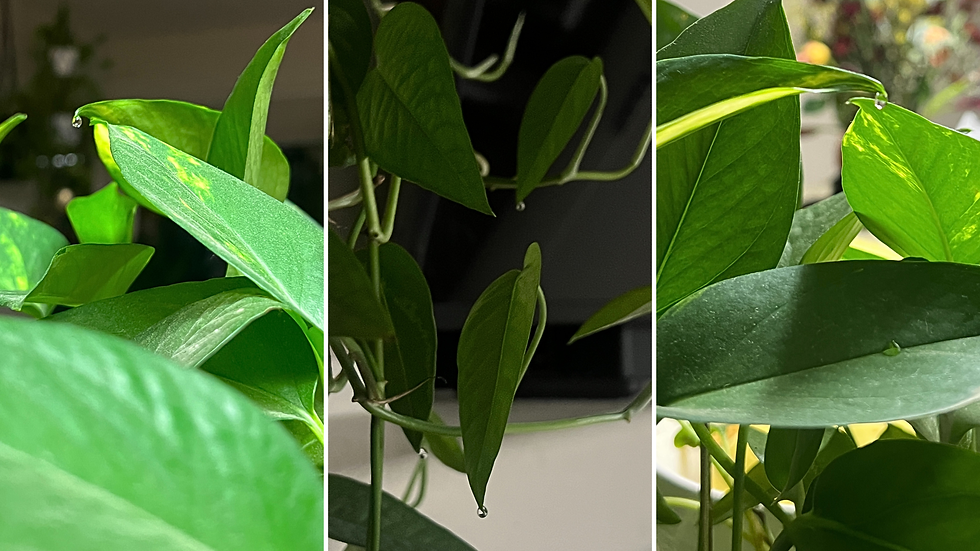
Guttation can be seen in the photos of the pothos above.
2. Humidifiers — In Moderation
A humidifier can be great for a specific zone of your home, like a plant shelf or cabinet. But don’t expect it to raise humidity across an entire room, or your house. “It’s only going to help that little section,” Aysia says. “We’re so dry here in Las Vegas that the effect is very localized.”
3. Pebble Trays
Pebble trays work by allowing water to evaporate slowly beneath your pots, slightly boosting humidity right around your plants. Simple, effective, and low-maintenance.

4. Skip the Misting
“Misting doesn’t do much.” Aysia explains. “It evaporates too quickly to help. It’s a very common misconception that it works, but in reality, it only gives temporary relief.”
5. Watch Your Placement
Microclimates matter. Bathrooms tend to hold humidity better because of their smaller size and occasional steam, while drafty windows can pull moisture away fast. “If your plants are happy where they are, there’s no need to fuss with humidity levels,” Aysia says. “You’ll know something’s off if they start to look stressed.” If you want to grow more sensitive species, like certain ferns or calatheas, Aysia suggests creating a mini environment just for them.
“People make little humidity cabinets or tabletop greenhouses at home. It’s a fun way to experiment.”
Often, people worry about mold when it comes to higher humidity loving plants. The desert air is typically dry enough to prevent it, but you still want to make sure there aren’t trays of water that sit for long periods.
One of the biggest mistakes Aysia sees? “Confusing humidity with watering. One of the biggest mistakes we hear about is overwatering. Just because it’s tropical and prefers higher humidity doesn’t mean it wants constantly wet roots. Let them dry a bit between waterings.”
On the flip side, If a plant has already suffered from dry air, try to gradually reintroduce humidity rather than shocking it with sudden change. You can also use terrariums, moisture meters, or stands that double as pebble trays.
Ultimately, Aysia says success with humidity-loving plants isn’t about gadgets or perfection, it’s about awareness and trusting your plants to adapt. Plants have evolved ingenious strategies to survive. Proof that they can be resilient in nearly any environment.
“Grouping plants that share needs is key, indoors and out,” she says. “Microclimates truly can make or break your space, especially in our brutal summers. Keep your humidity lovers together and your arid plants elsewhere, and everyone will be happier.”
Creating a tropical corner in your home can bring calm, beauty, and a literal breath of fresh air, even in the driest desert.
Stop by Mojave Bloom Nursery to explore a curated selection of tropical houseplants, terrariums, and tools for every plant parent along with thoughtful advice from Aysia and the team.
Aysia Tamules is Mojave Bloom Nursery’s Team Lead and our resident houseplant expert. With more than 100 houseplants of her own and a decade of hands-on experience caring for them, she’s developed a true gift for bringing struggling plants back to life. Her passion, patience, and deep knowledge make her an invaluable part of our team.
Want help taking these ideas beyond the pot and into your yard? Norm Schilling and the team at Schilling Horticulture Group design and care for desert landscapes across the Las Vegas Valley — built to thrive here, not just survive. Explore their work at schillinghorticulture.com.


Comments